
Pet Rules & Deposits
Moving & Relocation
Cats in Bangkok
Dogs in Bangkok
Moving & Relocation
Pet Rules & Deposits
Pet Travel
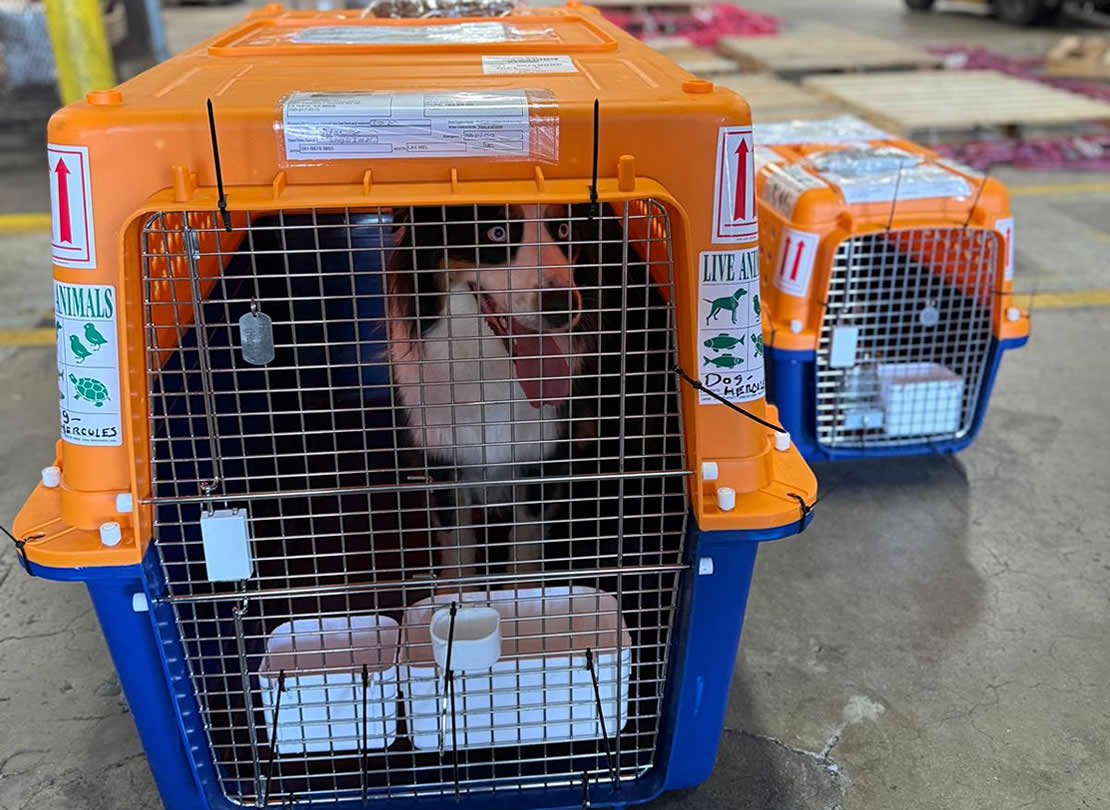
Planning a move to Thailand with cats or dogs is completely achievable, but it requires careful planning. Unlike relocating to some countries where pet import is relatively straightforward, Thailand has a specific set of steps that must be completed within strict time windows.
This guide takes you through everything you need to know: the import process, vaccinations and paperwork, what to expect on arrival and how to plan ahead for the new Bangkok pet laws (BMA Ordinance) that come into place in January 2027. We’ve also included practical tips for the journey itself and guidance on finding a verified pet-friendly rental when you arrive.
Before diving into the logistics of bringing your pet to Thailand, you need to understand the regulatory landscape you’ll be arriving into. Originally due to take effect in January 2026, the Bangkok Metropolitan Administration (BMA) has passed new rules for keeping pets. Following public discussions, enforcement has been postponed until 10 January 2027, giving pet owners more time to comply with the new rules.
The ordinance introduces several requirements that directly affect expats moving to Bangkok with pets.
All dog and cat owners in Bangkok will be required to register their animals with their local district office and have them microchipped within 120 days of birth or within 30 days of bringing the animal into the Bangkok Metropolitan area. Registration can be completed at local district offices, designated BMA veterinary clinics or online (in Thai language only). Free microchipping has been announced at selected BMA clinics.
For expats arriving with a pet already microchipped to international ISO standards (as required for import – more on that below), registration should be straightforward. The key is to act within 30 days of arriving in Bangkok with your pet.
There will be formal limits on how many pets can be kept based on the size of your home. Based on current BMA ordinance guidelines (which may change), for condos and apartments ranging from 20 to 80 square metres, a maximum limit of one dog or cat is permitted. Condos and apartments larger than 80 square metres can accommodate up to two dogs or cats. Higher limits apply to houses, which scales with the size of the plot of land.
Important to note: residents who already exceed these limits will not be required to move home for their animals, provided the pets are registered and the limit was exceeded before the rules came into force. If your pet passes away, you will not be able to get another pet if you then exceed the BMA quota.
For pet families arriving in Bangkok after the new rules come into force, you will be required to comply with the limits from day one and it’s worth factoring this into your pet-friendly property search.
Failure to register or microchip a pet within the prescribed timeline can lead to fines of up to 25,000 baht. Certain breeds classified as ‘dangerous’ may be required to be muzzled.
The new BMA rules will not override building juristic rules, so if your building’s management prohibits pets, the city-wide framework does not change that. Both sets of rules operate independently.
Read our full report on the new BMA regulations due to be introduced in 2027.
Thailand permits the import of dogs and cats, provided all documentation is in order before arrival. The process is sequential – each step must be completed before the next can begin – and the full timeline typically starts four to six months before arrival. It’s important to have everything in order, so it’s never too early to start your preparation.
Your pet must have a 15-digit microchip compliant with International Standards Organization (ISO) standard 11784 or Annex A of ISO standard 11785 prior to entering Thailand. This is an important first step, as the microchip must be registered before vaccinations are recorded, as the microchip number must appear on all official documentation. Most modern chips will already be compliant, but it is important to check.
If your pet already has a microchip that is not ISO-compliant, importers can provide a microchip scanner that will read their pet’s microchip. However, we would not recommend this method unless you have explicit confirmation from the relevant Animal Quarantine Station (e.g. the one at Suvarnabhumi Airport in Bangkok) before travel.
All vaccinations must be administered after the microchip has been implanted and the chip number recorded. For dogs, required vaccinations include rabies, DHPP and leptospirosis, all administered at least 21 days before arrival and not later than one year. For cats, the requirement is rabies and FVRCP, also administered 21 or more days prior and not older than one year.
Within seven days before departure, pets must also receive treatment for internal and external parasites, including fleas, ticks and tapeworms, which must be officially recorded by a veterinarian.
Important note: Rabies vaccinations must be administered at least 21 days before travel. In some cases (e.g. primary vaccinations), earlier timelines may apply, so planning ahead is recommended.
Getting the paperwork correct is where most pet relocations encounter problems. Original documents with official stamps are required on arrival, even if digital copies are submitted in advance.
An import permit is required for your pets to enter Thailand and it must be approved before departure. The application must be submitted no later than seven business days before arrival by email to the Animal Quarantine Station (AQS) at your intended port of entry. For Bangkok, there is an AQS at Suvarnabhumi Airport.
You’ll receive approval before travel, with final inspection and clearance completed at the AQS on arrival. The import permit will then be issued at the AQS following a physical inspection and a cash payment of 500 baht.
Your application for the import permit will require a copy of your passport, a recent photograph of your pet and copies of their complete vaccination records attached to their microchip number.
A health certificate provided by a veterinarian issued within 10 days of travel is required, with some countries requiring it within 72 hours. You should confirm the specific requirements imposed by your country of departure.
This certificate must be issued and endorsed by a government-authorised veterinarian in your country of departure. In the UK, this means a veterinarian with APHA endorsement. In the US, it’s USDA endorsement. As the health certificate has a very narrow window of validity, it will be one of the final steps before travel. Ensure you coordinate the timing carefully with your veterinarian for your departure date.
Airline policies on pet travel vary considerably and can also change at short notice. It is recommended to book your pet’s space on the flight as early as possible. Space for animals in cabin (if permitted) and the hold is limited, especially during peak travel periods such as Songkran and Christmas.
Check the rules for your specific airline before you book and travel. Requirements for carrier dimensions, ventilation and labelling vary between airlines and should be confirmed with the airline directly before booking. It’s also recommended to check the airline’s rules around breed restrictions, if you have a pet that may not fit their policies.
On arrival, all pets must be presented to the Animal Quarantine Station (AQS) at the airport. At Suvarnabhumi, this involves collecting your pet from the oversized baggage area or cargo section and proceeding to the AQS before clearing customs.
Officers check the import permit, vaccination records, health certificate and microchip. They also look for any visible signs of illness before releasing your pet.
It’s important to check that the relevant AQS will be staffed when you arrive, as some are only available during certain hours. Pets arriving outside these hours may be held overnight at your expense until the office reopens. If your pet is travelling as cargo rather than in-cabin or as excess baggage, you should plan your arrival accordingly.
Thailand does not impose routine quarantine on pets arriving with the correct documentation. Pets may be quarantined for up to 30 days if paperwork is missing or your pet is found to have any health issues. Most healthy, properly documented pets are released after a short inspection, but processing times can vary depending on arrival volume.
Important note: This is why it’s so important to get the right documentation in place before you travel. The consequences of arriving with incomplete paperwork can be serious.
Start the process at least four months before your intended travel date. The timeline is strict – the microchipping, vaccination sequence, permit application and health certificate window all need to align. Any delays at any stage can push the entire timeline back.
Confirm that your microchip is ISO 11784/11785 compliant and that the chip number appears on every official document. A mismatch in documentation is one of the most common reasons pets are held at the AQS.
Use a veterinarian who is familiar with international pet travel, or engage a specialist relocation service. The requirements for each country of origin differ slightly and an experienced veterinarian will know the specific requirements for Thailand from your country of departure.
Tip: There are pet import and export companies that can help with the process and charge a fee, if you would like the added layer of certainty.
It’s important to crate-train your pet well in advance of travel. A pet that is comfortable in their carrier will handle the journey significantly better and will settle into a new environment more quickly. For long-haul flights, speak to your veterinarian about whether any calming support is appropriate. Opinions and regulations differ, but their opinion on your specific pet is the best place to start.
Register your pet with the BMA within 30 days of arrival, which will be a legal requirement from January 2027. Registration can be completed at your local district office or at one of the BMA's veterinary clinics, several of which offer free microchipping and registration services.
It’s also recommended to find a reputable English-speaking veterinary clinic near your new home. Bangkok has excellent veterinary care at reasonable cost, with several internationally trained vets practising across the city's expat-heavy neighbourhoods.
Arriving in Bangkok and needing to find a rental property is where many expats encounter their second major hurdle. The city’s pet-friendly property market can be difficult to navigate, with unclear rules and a lack of availability of suitable properties.
The majority of Bangkok's condo buildings impose pet restrictions of some kind, ranging from blanket prohibitions to weight limits, breed restrictions and caps on the number of pets per unit. A property advertised as "pet-friendly" does not always mean that your specific pet will be approved. Under the incoming BMA ordinance, building juristic offices will have additional grounds to verify and enforce compliance for pets.
At Paws & Keys, we verify pet rules directly with both unit owners and building juristic offices before listing a property, so you only see homes where your pet has a genuine path to approval. If you're planning a relocation to Bangkok with a cat or dog, getting your housing search started early – ideally two months before you arrive - can make the transition considerably smoother.
You can browse our verified pet-friendly listings by area, budget and pet type, or submit a Request a Match with your move date and pet profile and we'll shortlist suitable options for you.
Starting too late is the most common and costly mistake with bringing pets to Thailand. The import process is strict on timing and there is no fast-track option.
Using a non-endorsed health certificate is the second most common problem. Thailand requires original ink stamps from government-authorised bodies in the country of origin. A certificate signed only by your local veterinarian, without the relevant government endorsement, will not be accepted at the AQS.
Assuming your building will accept your pet on arrival is a mistake made frequently by expats moving to Bangkok for the first time. Landlord approval and building juristic approval are separate and one does not guarantee the other. Sort your accommodation before you travel wherever possible and get explicit permission for your pet(s) in writing.
Moving to Thailand with a pet is a process that rewards careful planning. The import requirements, documentation windows and airline logistics all need to come together within a specific timeframe. For those who prepare properly, the arrival process is manageable. Bangkok is a pleasant city for pet owners, with strong veterinary provision, a growing pet-friendly culture and some excellent verified rental options for cats and dogs across the city.
Do I need to quarantine my pet when arriving in Thailand? If your documentation is in order and your pet is healthy, Thailand does not impose routine quarantine. An inspection at the Animal Quarantine Station (AQS) on arrival is required, but most pets with correct paperwork are released the same day.
How long does the import process take? It’s recommended to start the process at least four months before travel.
Does the new BMA law affect people arriving in Thailand with pets? Yes. From January 2027, all dogs and cats in Bangkok must be registered and microchipped within 30 days of arriving in the city. This applies to pets moving to Bangkok from abroad. Registration can be completed at district offices or BMA veterinary clinics and the process is straightforward for pets that already have a compliant microchip.
Can I bring my pet if I haven’t yet secured housing? Technically yes, but it is not recommended. Bangkok's rental market for pet owners requires careful navigation. Arriving without confirmed, verified pet-friendly accommodation can add unnecessary stress to an already complex relocation. Use the time before you travel to start your housing search - Paws & Keys can help you shortlist verified options before you arrive.